24/7 vehicle recovery across Dubai
24/7 Car Recovery Dubai
Send your live location on WhatsApp or call. The dispatcher confirms the right truck, gives you a quote before we start and sends it to your pin. Average arrival in Dubai is about 30 minutes.
- 24/7, every day
- Dubai-wide
- 4.8 on Google (281 reviews)
- English and Arabic spoken
Illustration
What happened to your vehicle?
Pick the closest match
We will point you to the right help. Not sure? Send us a photo on WhatsApp and the dispatcher will tell you.
- My car won't startA flat battery is the usual cause. Often fixed on the spot with a jump-start.Get help
- Car stuck in sandStop revving, send your pin and a photo. Here is what to do while you wait.Get help
- 4x4 stuck in the desertLand Cruiser, Patrol or pickup buried to the axles. Our own 4x4 team recovers it.Get help
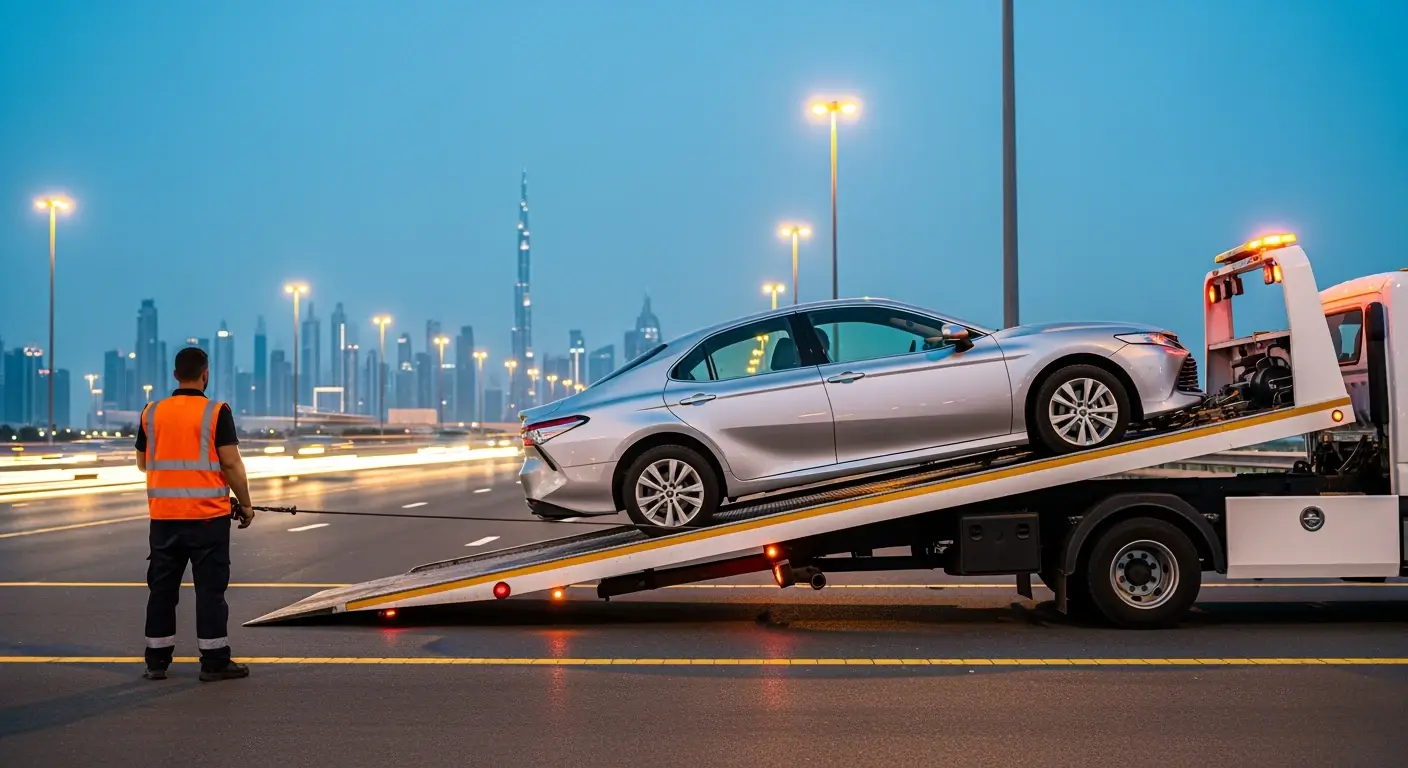
- Vehicle needs towingFlatbed or wheel-lift to a workshop, your home or another emirate.Get help
- Battery needs replacingAn old battery that keeps going flat. We can change it where the car is parked.Get help
- Flat tyreA tyre change at the roadside, or a tow if there is no usable spare.Get help
- Accident or damageCareful loading of damaged cars, electric cars and luxury cars.Get help
- Stuck somewhere difficultWhat a pullout is, and which situations we can and cannot help with.Get help
Our services
Recovery, towing and roadside help
One number covers all of it. Here is what each one means in plain words.
Illustration
Car recovery
Careful handling after a crash or breakdown
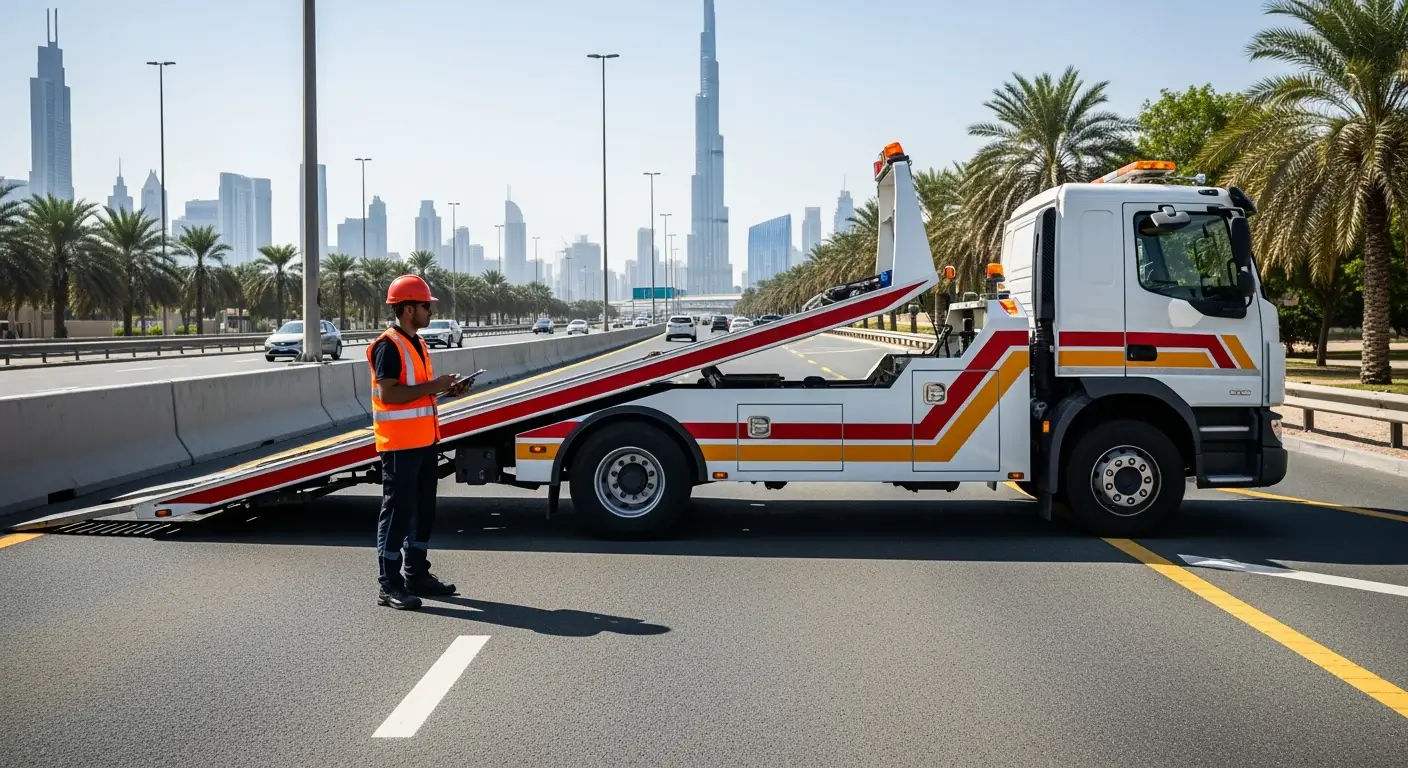
Accident recovery, electric cars, luxury and sports cars, and motorcycles. The crew chooses the loading method for your vehicle, and a flatbed is the answer for electric, damaged and low cars.
Tell the dispatcher the make and model and what happened. You get the quote on WhatsApp before the truck moves.
Illustration
Towing
Flatbed or wheel-lift, to a workshop or home
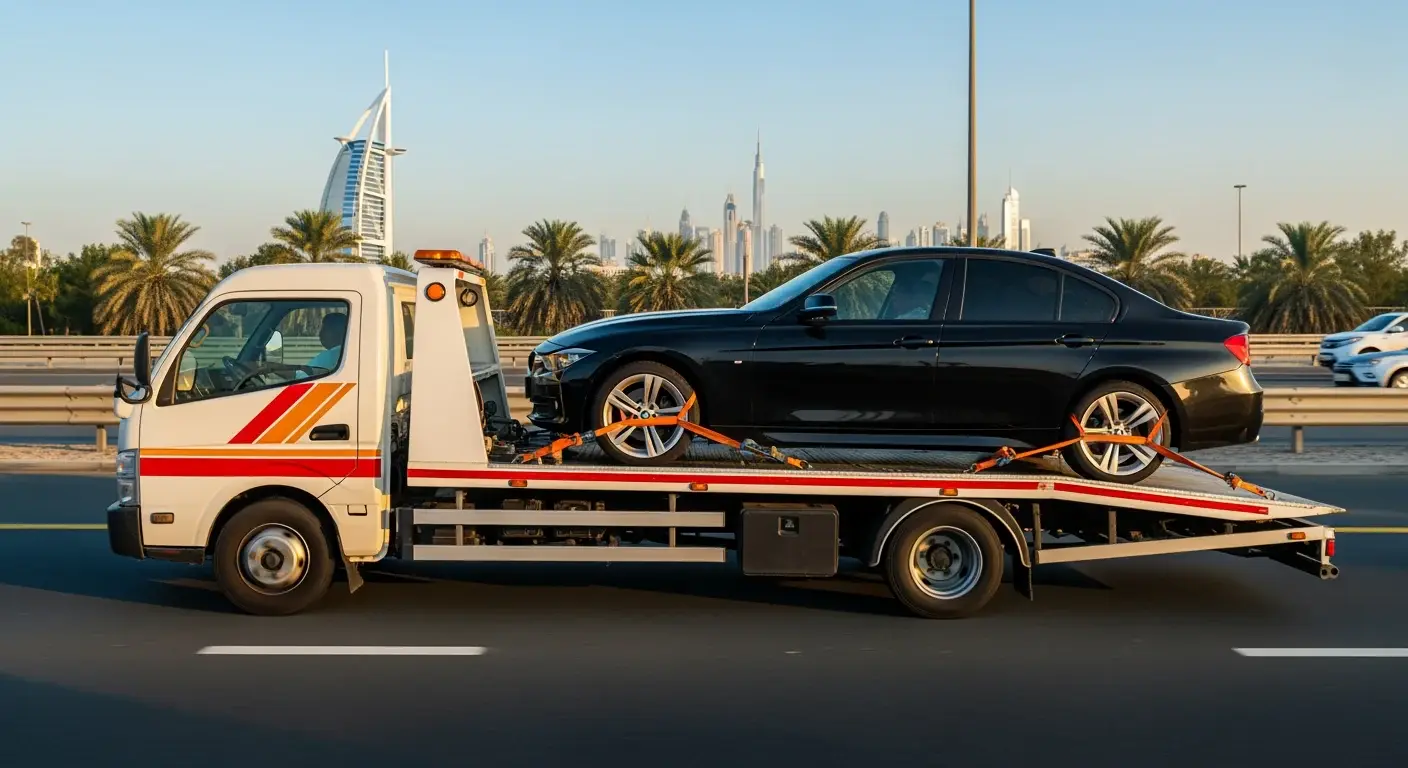
A tow moves a car that can't, or shouldn't, be driven. Short city moves can go on a wheel-lift. Electric cars, all-wheel-drive cars, low sports cars and long distances go on a flatbed.
We tow from Dubai to every emirate. Pickups are in Dubai.
Illustration
Roadside help
Many problems are fixed where the car stands
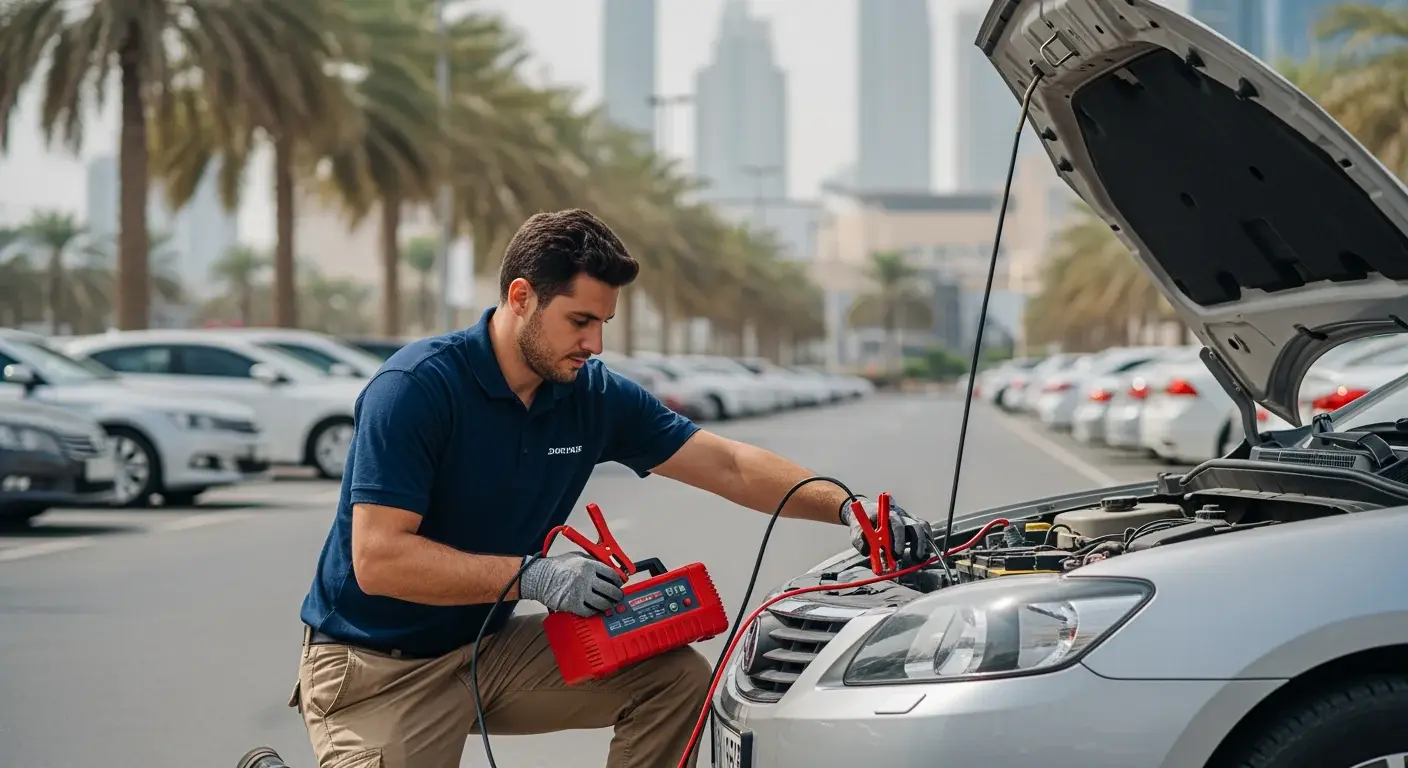
A flat battery, a flat tyre, an empty tank or keys locked inside can usually be solved on the spot, with no tow. If the car still won't move after the fix, we tow it.
Car pullout service
Pullout or tow: which one do you need?
They sound alike but solve different problems. A pullout gets a stuck vehicle back onto firm ground. A tow moves a vehicle that can't be driven. Many desert jobs need the pullout first and a tow afterwards.
| Question | Car pullout | Towing |
|---|---|---|
| What it does | Brings a stuck vehicle back onto firm ground | Moves a vehicle that can't, or shouldn't, be driven |
| Typical situation | A car or 4x4 sunk in soft sand, in the desert or on a beach | A breakdown, crash damage, a warning light, a trip to the workshop |
| Equipment | A 4x4 recovery vehicle with straps, a winch and recovery boards | A flatbed or a wheel-lift truck |
| What follows | A tow, if the car can't drive away afterwards | Often nothing: a jump-start or fix on the spot may be enough |
We don't do basement or underground car-park pullouts, and we don't pull vehicles out of ditches, mud or building sites. Our pullouts are for sand, desert and beach recovery.
Desert and sand recovery
Stuck in sand? Do these three things first
- 1Ease off the accelerator. Spinning wheels dig the vehicle in deeper.
- 2Send your live pin and a photo. A photo showing how deep the wheels sit tells us which method to use.
- 3Stay with the vehicle, in shade. Keep water within reach and keep everyone together.
Illustration
Illustration
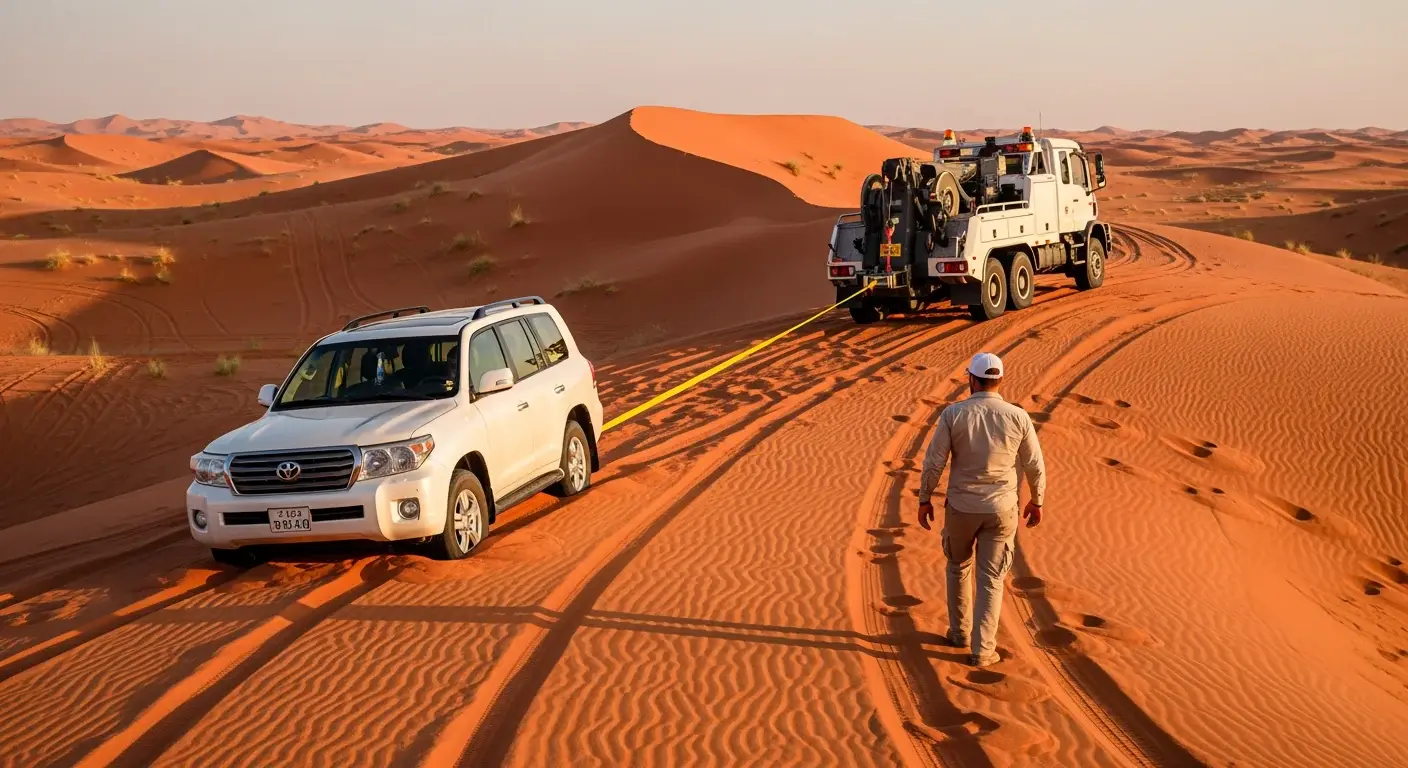
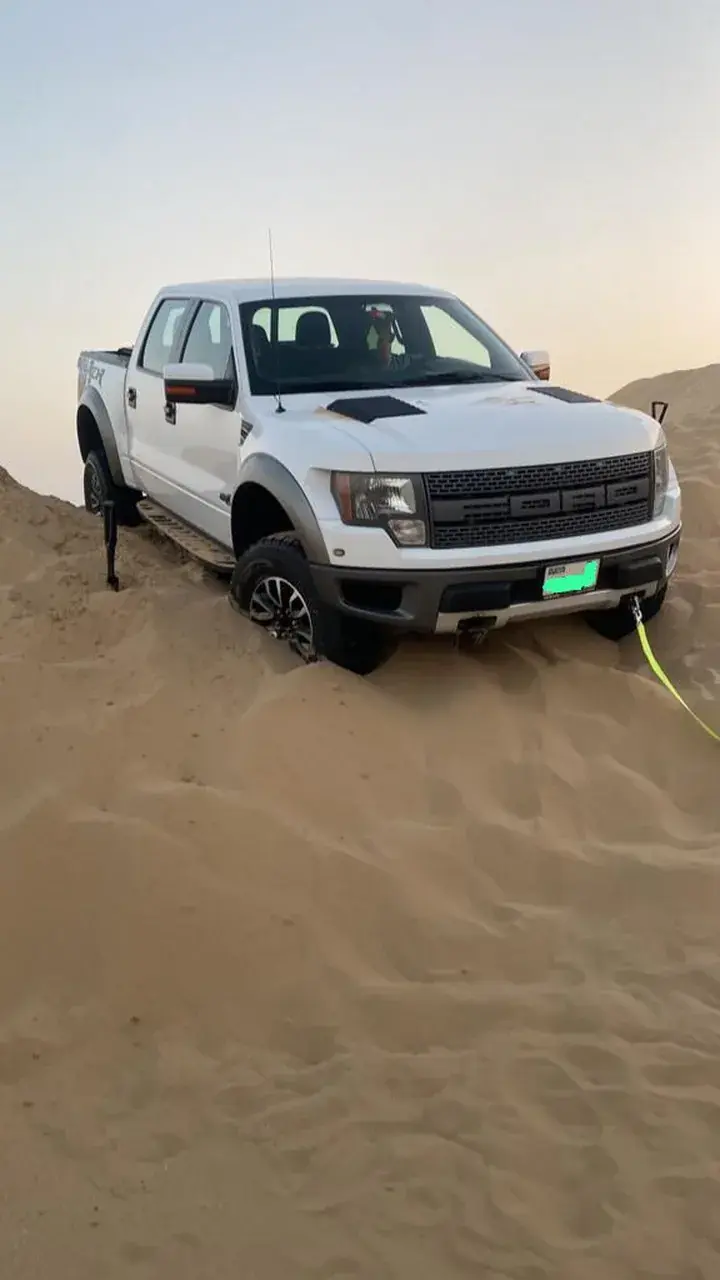
4x4 recovery
A heavy 4x4 stuck in sand
Land Cruisers, Patrols and big pickups get stuck as often as small SUVs. The weight just sinks them faster, and the pull needs more care.
- Straps attach only to rated recovery points, never a tow ball or plastic bumper
- A winch is used for deep burial or slopes, with recovery boards to finish
- Tyres are let down first, then pumped back up before you drive on tarmac
How it works
Three steps from stranded to sorted
No app and no form. Send a WhatsApp message or call.
- 1
Tell us where you are
Send your live location pin on WhatsApp, or call. Say what the vehicle is and what happened. English or Arabic.
- 2
We send the right truck
The dispatcher picks flatbed, wheel-lift or 4x4 recovery for your situation and sends the quote on WhatsApp first. Average arrival is about 30 minutes in Dubai.
- 3
We move or recover your vehicle
The operator loads, tows or pulls your vehicle out. Ask for an update on the same WhatsApp thread at any time.
Why drivers call us
What you get when you call
- Rated 4.8 on Google281 reviews you can read, with names and dates, on our Google profile.
- Our own 4x4 desert teamSand and desert pullouts are done by our own recovery crew.
- A quote before we startYou see the price on WhatsApp first and decide with the number in front of you.
- About 30 minutes on averageAcross Dubai. Desert sites and outer areas take longer; you get an ETA on WhatsApp.
- Every vehicle typeMotorcycles, cars, SUVs, electric and luxury cars, trucks, buses and trailers.
- 24/7, English and ArabicPhone and WhatsApp are answered every day of the year, in English or Arabic.
Where we work
Pickups across Dubai, towing to every emirate
We collect vehicles anywhere in Dubai. We tow from Dubai to Abu Dhabi, Sharjah, Ajman, Ras Al Khaimah, Fujairah and Umm Al Quwain, but we don't collect cars that are already inside another emirate.
Rated 4.8 from 281 Google reviews
Read what customers wrote, with names and dates, on our Google Business Profile.
What is the fastest way to get car recovery in Dubai?
Send your live location pin on WhatsApp to +971 56 361 3657, or call the same number, and say what vehicle it is and what happened. The dispatcher confirms the right truck (flatbed, wheel-lift or 4x4) and sends a quote. Average arrival across Dubai is about 30 minutes.
Our services at a glance
Accident, EV and luxury recovery
For cars that need careful handling after a crash or when they can't be driven. A flatbed or wheel-lift is chosen to suit your car.
TowingTowing service in Dubai
Moves a car that can't be driven to a workshop, your home or another emirate. Flatbed for EVs, 4x4s and long distances, wheel-lift for short city moves.
PulloutCar pullout service
What a pullout is, how it differs from a tow and what to send us when your car is stuck in sand.
DesertSand and desert recovery
Our own 4x4 team pulls vehicles out of soft sand and off dunes. Send a location pin and a photo to start.
4x44x4 stuck in sand
Heavier SUVs and pickups: recovery points, winch pulls and what makes a pullout easy or hard.
RoadsideRoadside help and battery jump-start
Flat batteries, flat tyres, lockouts and fuel delivery. Many problems are fixed without a tow.
BikesMotorcycle and scooter recovery
Bikes are loaded upright and strapped down with care. Tell us the make, model and condition.
HeavyTrucks, buses and trailers
Larger vehicles need larger equipment. Send the type, weight and load and the dispatcher confirms the plan.
Car recovery in Dubai: everything you need to know
Last updated
Car Recovery Dubai · 27 St Sheikh Zayed Road, Trade Center First, Dubai, UAE · +971 56 361 3657 · open 24 hours, every day · English and Arabic spoken · rated 4.8 from 281 Google reviews
What is car recovery in Dubai, and when do I need it?
Car recovery is a service that sends a truck to move a vehicle that can't, or shouldn't, be driven. In Dubai that covers a breakdown on Sheikh Zayed Road, a flat battery in a mall car park, a car after a crash and a 4x4 stuck in the dunes. You contact one number, say what happened, and the dispatcher sends the right truck.
Why do Dubai drivers need recovery so often?
Dubai is tough on cars. Summer heat wears batteries and tyres down, highways like Sheikh Zayed Road and Al Khail Road carry heavy traffic all day, and weekend trips to the desert put sand under the wheels. Because of that, many drivers call for help at some point, usually for something simple: a battery that went flat overnight, a tyre that lost air, keys left inside the car. A short call to a vehicle recovery service turns that into a short wait and a clear next step.
What is the difference between recovery, towing and a pullout?
They sound alike, but each solves a different problem. A towing service moves a car that can't be driven from one place to another, for example from your home to a workshop. Recovery covers getting a vehicle out of a difficult spot first, such as after a crash. A pullout, which in Dubai means getting a vehicle out of sand, is what our car pullout service does: it brings a stuck vehicle back onto firm ground. A fix on the spot, like a jump-start from roadside assistance, often removes the need for any of the three. Tell the dispatcher what happened and they will say which one fits.
Which vehicles can you recover?
Everyday cars and SUVs, electric vehicles, luxury and sports cars, motorcycles, and larger vehicles such as trucks, buses and trailers. Each type needs different handling, which is why the first question is always what the vehicle is. Riders can read about bike recovery, and fleet or commercial drivers about heavy vehicle recovery. If your vehicle isn't on that list, send a photo and we will tell you whether we can help.
How do I get a recovery truck to me fast?
Send your live location pin on WhatsApp to +971 56 361 3657, or call the same number. Add the make and model and a line about what happened. The dispatcher replies with a quote, and average arrival across Dubai is about 30 minutes.
What should I send on WhatsApp?
Four things get the right truck moving: your live location pin, the vehicle's make and model, what went wrong, and where it needs to go. A photo of the car or the dashboard helps. A live pin beats a street name, because it removes any guesswork about which entrance of a mall or which side of the carriageway you are on. If you have no signal for a pin, a Google Maps link or the nearest landmark works too. If you are searching for help close by, the car recovery near me page shows how to share your exact location.
How quickly will the truck arrive?
Average arrival across Dubai is about 30 minutes, and it depends on traffic and how far you are from the city. Outer areas and desert sites take longer, and the dispatcher gives you an ETA on WhatsApp once you share your pin. Dispatch answers around the clock, every day of the year, in English and in Arabic.
Do I have to stay on the phone?
No. Once you have sent the details you can put the phone down. The whole exchange stays on one WhatsApp thread, which keeps the time, place and destination in one spot for later.
Is Car Recovery Dubai a service I can trust?
Customers rate us 4.8 out of 5 from 281 reviews, and you can read them, with names and dates, on our Google Business Profile. You get a quote before the job starts, so you stay in control from the first message.
Flatbed or wheel-lift: which one does my car need?
Most cars can go on either, but electric vehicles, all-wheel-drive cars, low sports cars and cars that won't roll should always go on a flatbed. A wheel-lift suits short city moves with an ordinary car. Tell the dispatcher the make and model and they choose for you.
What is the difference between a flatbed and a wheel-lift?
A flatbed carries the whole car on a tilting deck, so no wheel touches the road and nothing in the drivetrain turns. A wheel-lift raises two wheels and tows the car on the other two, which is quick and handles tight streets well. Both work well when matched to the car, and the match is what matters.
Why do electric and all-wheel-drive cars go on a flatbed?
Many owner's manuals for electric and all-wheel-drive cars say not to tow them with the wheels turning. Turning wheels spin the motor or the drivetrain, which can damage them. A flatbed avoids that completely, so EV recovery always uses one. A Tesla or a BYD follows the rule because of the electric motor, and a Land Cruiser or a Patrol follows it because of the all-wheel-drive system.
What about luxury and sports cars?
Low cars scrape on steep ramps and mark easily under the wrong strap. The answer is a flatbed, a gentle loading angle and soft straps, planned from the make, model and ride height. If your car is lowered, say so when you message. You can read more about luxury and sports car recovery before you call.
Can you tow a car that won't start or roll?
Yes. A winch pulls a non-running car onto the flatbed deck, and the wheels don't need to turn or steer. Tell us if the car is locked in gear, has a seized wheel or has lost its keys, so the right equipment arrives the first time. The aim is a car that reaches the workshop handled with care.
What should I do if my 4x4 is stuck in sand?
Stop spinning the wheels, share your location pin on WhatsApp, and wait with the vehicle in the shade. Our own 4x4 team pulls vehicles back onto firm ground with recovery straps or a winch. The first ten minutes are simple, and they help a lot.
How does a car pullout service work in Dubai?
Soft sand catches Land Cruisers, Patrols and pickups often when the driver loses momentum on a climb or drives on tyres that are too hard for the sand. Our car pullout service covers sand, desert and beach recovery. The tyres are let down, sand is cleared from the wheels, then a recovery strap or winch pulls the vehicle free, with boards under the wheels if needed. There are step-by-step pages on what to do when your car is stuck in sand and on a heavy 4x4 stuck in sand.
Which desert areas do you recover from?
Popular dune areas include Big Red (Al Badayer), Lahbab, Margham and Al Lisaili, along with the off-road tracks near them. If you don't know the name of the area, the location pin is more reliable than a name. Desert sites are further out than the city, so the dispatcher gives you an ETA as soon as they see your pin.
What can I do while I wait?
Stay with the vehicle, in shade if you can, with water within reach, and take your foot off the accelerator, because spinning wheels dig the car deeper. The stuck-in-sand page has the full steps, including how far to let the tyres down.
Which pullouts do you not offer?
We don't do basement or underground car-park pullouts, and we don't pull vehicles out of ditches, mud or building sites. Our pullout service is for sand, desert and beach recovery. If you are not sure whether your situation fits, ask first.
How much does car recovery cost in Dubai?
There is no fixed price list, because every job is different. The price depends on distance, vehicle type and how hard the recovery is. You get a quote on WhatsApp before the job starts, so you decide with the number in front of you.
What affects the price of a tow or recovery?
Distance is the biggest factor: a short hop across Dubai Marina takes less effort than a run from Dubai to Abu Dhabi. The vehicle matters too, because a flatbed for a low sports car or a winch pull for a heavy pickup uses more equipment than a standard tow. A tight pickup and waiting time at a workshop add effort. For a sand pullout, how deep the car sits and how far it is from a track matter most.
How does the quote work?
Send your location, the vehicle and the destination on WhatsApp. The dispatcher replies with the price and the method, flatbed or wheel-lift. You get the quote before the job starts, and the details stay in one thread, so you can scroll back to them later.
Why ask for a quote first?
You can compare, ask a question or send a photo before anything is booked, and you know what to expect on the day. That is why we don't publish a one-size price list: a number that fits a flat battery would be wrong for a heavy pickup in the dunes.
Can I cancel if my situation changes?
Yes. You can cancel free of charge before a truck is dispatched. After dispatch, fees may apply, and the full terms are on the cancellation policy page, so read them before you confirm. To cancel, send a WhatsApp message or call the same number.
What happens after a crash or breakdown on Sheikh Zayed Road?
First make sure everyone is safe, and call 999 (police) or 998 (ambulance) if anyone is hurt. Then get the police report number, because your insurer will ask for it, and send us your location and photos on WhatsApp. We recover the car to the workshop you choose.
What should I do at the scene?
If it is safe, take a few photos first. Then switch on your hazard lights, move to the hard shoulder if the car will still move, and get everyone out on the side away from traffic. Stand well back, behind the barrier if there is one, not beside the car. If you carry a warning triangle, place it behind the vehicle on the traffic side when it is safe to do so. On busy roads such as Sheikh Zayed Road, Al Khail Road, Sheikh Mohammed bin Zayed Road and Emirates Road, these small steps keep the scene calm while help is on the way.
How is a damaged car recovered?
A crash-damaged car goes on a flatbed, so a bent wheel or a leak doesn't stop the recovery. Tell us what is damaged, for example a bent wheel, a leak or a locked steering wheel, so the right equipment comes. The page on accident recovery walks through what to send and what happens next.
What about the insurance side?
We recover the car and your insurer handles the claim. What helps most is the police report number and clear photos of the car and the scene, so take those before the car is moved. Send the photos to us as well and keep the WhatsApp thread, which holds the time, place and destination.
Where does the car go afterwards?
To the workshop, dealership or home address you name, in Dubai or in another emirate. Give us the workshop's name and a Google Maps pin when you message, and the operator takes the car there.
Can you fix my car on the spot instead of towing it?
Often, yes. A flat battery, a flat tyre, an empty tank or keys locked inside can usually be solved where the car stands, with no tow. If the car still won't move after the quick fix, we can tow it.
What problems can be fixed at the roadside?
The common ones are a car that won't start because of a flat battery, which a battery jump-start fixes, a flat tyre, running out of fuel, and keys locked inside. For a car lockout the aim is to open the car without damage, so tell us the make and model and whether the car has an alarm. For fuel delivery, say whether your car takes petrol or diesel.
Why do car batteries fail so often in summer?
Heat speeds up the wear inside a car battery, and short trips don't give it time to recharge. A fairly new battery that went flat after a light was left on usually revives with a jump. An old battery, a swollen case, white or green crust on the terminals, or a battery that goes flat again within hours needs replacing. The car battery service page has simple rules of thumb, and the page on battery replacement says what to send us so the right battery is chosen.
When is a tow the better choice?
If the car won't start even after a jump, shows a warning you shouldn't drive with, or has crash damage, a tow protects it. The dispatcher will tell you which one fits, so you don't pay for the wrong service. Either way the first message is the same: your location, the make and model, and what happened.
Which areas of Dubai and the UAE do you cover?
We work across Dubai's communities, with pickups anywhere in Dubai. We tow from Dubai to the other emirates, but we don't collect vehicles that are already inside another emirate. Send your pin and the destination, and the dispatcher confirms. The service areas page lists the Dubai communities we serve.
Which Dubai communities do you serve?
Communities we serve include Dubai Marina and JBR, Downtown Dubai, Business Bay, Al Barsha and Deira. Whatever the neighbourhood, a live location pin tells the dispatcher exactly where to go, down to the car park level or the side of the road. That is also why we ask for a pin rather than a description.
Can you tow my car from Dubai to Sharjah, Abu Dhabi or another emirate?
Yes, from Dubai. We tow from a Dubai pickup to Abu Dhabi, Sharjah, Ajman, Ras Al Khaimah, Fujairah and Umm Al Quwain. Pickups are in Dubai only, so we can't collect a car that is already inside another emirate. Tell us the Dubai pickup and the drop-off, and the dispatcher confirms the route and quotes the distance. For long distances a flatbed is the safest choice, so the car rides on the deck the whole way.
Can I get help in Arabic?
Yes. Dispatch handles WhatsApp messages and calls in English and Arabic, around the clock.
Can you help with my situation?
Ask. A short message is enough, and if a job isn't one we do, we will say so rather than waste your time. For anything else, from a flat battery to a bus, send a WhatsApp message, visit our contact page or read about us.
People also search for
Frequently asked questions about car recovery in Dubai
How do I get car recovery in Dubai right now?
Send your live location pin on WhatsApp to +971 56 361 3657, or call the same number, 24 hours a day. Add the make and model and what happened. The dispatcher replies with a quote, an ETA and the right truck: flatbed, wheel-lift or 4x4.
Is there a car recovery service near me in Dubai?
Yes. Share your live location pin and the dispatcher sends a truck to your pin. Average arrival across Dubai is about 30 minutes, depending on traffic and where you are. Desert sites and outer areas take longer, and you get an ETA on WhatsApp.
Can you pull my 4x4 out of sand?
Yes. Our own 4x4 recovery team handles cars, SUVs and pickups stuck in sand. Send a location pin and a photo that shows how deep the wheels sit. While you wait, stop spinning the wheels, because that digs the vehicle in further.
What is the difference between a tow and a pullout?
A tow moves a car that can't be driven from one place to another. A pullout gets a stuck vehicle back onto firm ground, usually from sand. Many jobs are both, for example a pullout from the dunes followed by a tow to a workshop.
Do you recover electric cars like a Tesla?
Yes, on a flatbed. An electric vehicle should never be towed on its wheels, because turning wheels can damage the motor and regenerative braking. Tell the dispatcher it is an EV when you message, and give the make and model.
How much does it cost to tow a car in Dubai?
There is no fixed price list, because jobs differ. Distance, vehicle type and how hard the pickup is all change the price. Send your details on WhatsApp and you get a quote before anything starts.
My car won't start. Do I need a tow?
Not always. A flat battery is often fixed with a jump-start where the car is parked. If it still won't start after a jump, or shows a serious warning, it needs a tow. Send the make, model and symptoms and the dispatcher will say which.
Can you help with a motorcycle, a truck or a bus?
Yes. Motorcycles and scooters are loaded upright and strapped down properly, and trucks, buses and trailers are handled as heavy recovery. Send the vehicle type, weight and load, and the dispatcher confirms what can be done.
Can you tow my car to Sharjah or Abu Dhabi?
Yes, from Dubai. We tow from a Dubai pickup to Sharjah, Abu Dhabi, Ajman, Ras Al Khaimah, Fujairah and Umm Al Quwain. We don't collect cars that are already inside another emirate. Tell us the pickup and drop-off, and the dispatcher confirms the route and quotes the distance. Long distances go on a flatbed.
Can I cancel a recovery after I have booked?
You can cancel free of charge before a truck is dispatched. After dispatch, fees may apply, so check the cancellation policy for the terms. To cancel, send a WhatsApp message or call the same number.
Quote before we start
Need recovery right now?
The fastest way is WhatsApp: share your location pin, the vehicle and what happened. Or call the 24/7 line.
Open 24 hours, 7 days a week. English and Arabic spoken. About 30 minutes on average in Dubai. Desert and outer areas take longer.