4x4 recovery, Dubai
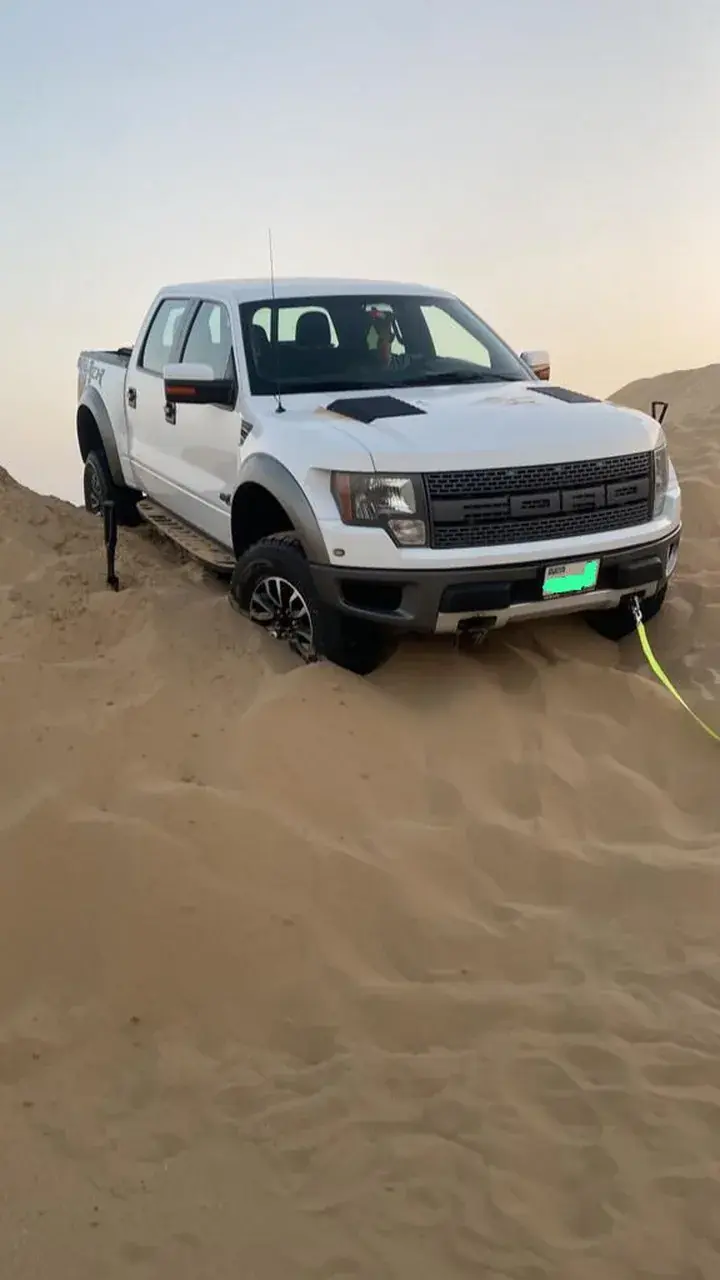
4x4 Stuck in Sand in Dubai: Land Cruiser, Patrol and Pickup Recovery
A heavy 4x4 stuck in sand is a bigger job than a small car: more weight, deeper burial and more load on the recovery points. Send your pin and a photo, and our own 4x4 team confirms the pull plan before they set out.
- Land Cruiser, Patrol, pickups
- Winch and strap pulls
- 24/7
Illustration
- What it is
- Recovery of a heavy SUV or pickup from soft sand, planned around its weight and its recovery points.
- Where
- Dubai desert areas such as Big Red (Al Badayer), Lahbab, Margham and Al Lisaili.
- When
- 24 hours a day, every day. Average arrival in Dubai is about 30 minutes.
- How to request
- WhatsApp your live location pin, or call +971 56 361 3657.
- What to send
- A live pin, a photo of how deep the body sits, the model, any lift or aftermarket bumper, and whether a trailer is attached.
- What happens next
- The dispatcher confirms the method and quote on WhatsApp, then the 4x4 team comes to your pin.
The problem
Why do heavy 4x4s get stuck in sand?
Weight sinks a vehicle faster in soft sand, and a capable 4x4 invites a driver to go further into the dunes. Most heavy 4x4s get stuck after losing momentum on a climb, on tyres that were too hard for the sand, or with the underside resting on the sand, which is called high-centred.
- Lost momentum: a climb that needs speed stalls halfway, and the wheels dig in as the driver adds throttle.
- Tyre pressure: hard road pressures give a narrow footprint, so a heavy vehicle cuts through the surface.
- High-centred: the chassis or diffs sit on the sand and the wheels no longer carry the weight.
- Load: roof racks, water, extra passengers and a trailer all add to the problem.
How it differs
What makes a heavy 4x4 recovery different from a car?
More weight means more pull force and more load on every part of the chain: the strap, the shackles and, above all, the recovery points. A heavy 4x4 is usually pulled with a winch and a snatch block, or a strap rated for its weight, from points built to take the load.
The recovery points come first
Factory recovery points are bolted to the chassis and rated for the job. Aftermarket bumpers and bull bars may have points that are not rated, and a tow ball or a plastic bumper is never an anchor. The crew checks the points before anything is tensioned, so say if yours were modified.
Steady pull, not a jerk
A winch gives a steady, controllable pull, which is kinder to a heavy vehicle than a snatch. Where a kinetic strap is used it must be rated for the weight of the heavier vehicle, and everyone stays well clear of the line of the strap.
Which method for which situation?
| Situation | Usual approach |
|---|---|
| Heavy 4x4 bogged, wheels buried, on level sand | Tyres let down, then a rated strap pull or a winch pull |
| High-centred: chassis resting on the sand | Clear sand under the body, lift or ease the load, then a controlled winch pull |
| Buried on a dune face or slope | Winch with a snatch block from above; the team may re-anchor the recovery vehicle |
| Two vehicles stuck together | Recover the lighter or easier one first, then the other |
| Trailer or caravan attached | Trailer disconnected or recovered separately, then the 4x4 |
Details that help
What should I tell you about my Land Cruiser, Patrol or pickup?
Send the model and year, a photo showing how deep the body sits, and whether the factory recovery points are still in place. Add any lift, big tyres, aftermarket bumper or bull bar, a roof load, and whether a trailer is attached.
- Is the vehicle level, or tilted on a slope?
- Are the tyres already let down, and to roughly what pressure?
- Do you have recovery boards, a shovel or a rated strap with you?
- How many people are with the vehicle, and is anyone unwell?
With that, the dispatcher can name the method and the quote in one reply. For the basics of waiting safely, read what to do when your car is stuck in sand.
Afterwards
What should I check on a heavy 4x4 after the pull?
Pump the tyres back to road pressure, check the temperature gauge, and look under the vehicle for a hanging undertray, a leak or a bent part. If it overheated, dragged its underside or won't start, ask for a tow instead of driving on.
Heavy vehicles work their drivetrain hard in soft sand, so a short stop to let it cool is cheap insurance. Our towing service can carry the vehicle from the dunes to a workshop if needed.
What to send for a 4x4 recovery
- 1Your live location pin
- 2A photo showing how deep the body and wheels sit
- 3Model, year, any lift, big tyres or aftermarket bumper
- 4Level or slope, trailer or no trailer, how many people
- 5Whether the factory recovery points are in place and undamaged
Why call early?
Every minute of spinning wheels digs a heavy vehicle in deeper, and a deeper vehicle needs more pull. A short message while the 4x4 has only sunk a little is the cheapest recovery there is.
Not a heavy 4x4?
A sedan or a small SUV is usually quicker to free. See the car pullout service for how pullouts work in general, or desert recovery for the areas our team covers.
Frequently asked questions
Can you recover a Land Cruiser or Patrol buried to the chassis?
Often yes, with a winch and a snatch block rather than a strap alone. Send a photo that shows how deep the body sits and whether the vehicle is level, and the dispatcher confirms the plan before the team sets out.
Can you recover a lifted or modified 4x4?
Yes. Tell us about the lift, the tyre size, any aftermarket bumper or bull bar, and whether the factory recovery points are still in place. Aftermarket parts change where a strap can safely attach.
My 4x4 has a trailer or caravan attached. Is that a problem?
It changes the plan. Say so in your first message, and add the trailer type and whether it is loaded. The team may recover the trailer separately, or disconnect it before pulling the 4x4.
Should I let the tyres down on a heavy 4x4?
Many drivers go to about 15 PSI as a starting point in soft sand, and a heavy vehicle sometimes needs lower. Only do it if the vehicle is stable and the ground is level, and pump the tyres back up before driving on tarmac.
Is it safe to pull my 4x4 out with another car and a rope?
Better to wait. An ordinary rope puts a violent shock through both vehicles, and a strap must be rated for the weight of the heavier vehicle and attached to rated recovery points.
What checks does a heavy 4x4 need after a pullout?
Re-inflate the tyres, look for a hanging undertray or leaks, and watch the temperature gauge. If it overheated or dragged its underside, a workshop check is wise before a long drive.
How much does a heavy 4x4 recovery cost?
It depends on how deep the vehicle sits, the slope, its weight and the distance, so there is no fixed price. You get a quote on WhatsApp before we start.
Quote before we start
4x4 stuck in sand?
Send your live pin and a photo on WhatsApp, or call the 24/7 line. Ease off the accelerator, stay clear of the wheels and keep everyone together.
Open 24 hours, 7 days a week. English and Arabic spoken. About 30 minutes on average in Dubai. Desert and outer areas take longer.